1:35
Picture this: every time your team creates a task, they have to fill in a name, choose a required sub-process, find the right form, indicate the service, link a client, pick a location, and only at the end assign who will do it and when. That's a lot of steps for something that happens dozens of times a day.
That just changed.
The benefit
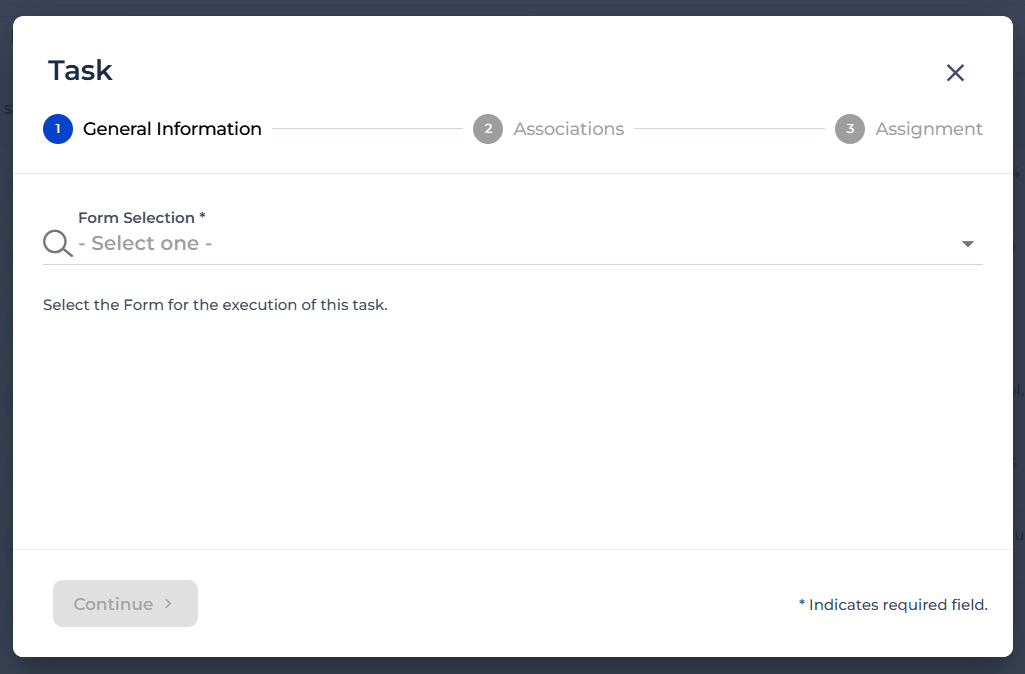
Task creation still has three steps, but now it starts with the form, which already brings in most of the information preconfigured, as covered in Task Settings. That means fewer fields to fill in by hand and fewer repetitive decisions, to the point that creating a task can take just 4 clicks.
How ir works?
Before: The first step asked for a name and a sub-process (required), and optionally showed dynamic fields or other extra information if applicable. The second step asked for the form, service, client, and location (optional). The third step assigned the person responsible, date, time, and duration.
Now: The first step is choosing the form, which can already bring in the task name and other preconfigured data, along with room for any dynamic fields or extra information that apply to each case. The second step just asks you to review the associations (service, sub-process, client), already marked as required or optional depending on each form. The third step assigns user, date, and time, which can also come pre-filled based on the configuration.
The sub-process, which used to be required from the start, is now reviewed as just one more association, based on what each form defines.